
Method and Sources
Historical research is stronger when it makes visible its sources, how they are interpreted, and what they cannot demonstrate. This page explains the criteria used in the site’s contributions.
Three levels to keep distinct
Testimony: what a document actually says and who produced it.
Reconstruction: how scholars compare that document with other sources, with context, and with the history of research.
Interpretation: the philosophical or moral questions we ask of the past today.
A reflection may be meaningful, but it should not be presented as a statement made by medieval actors or as a conclusion directly established by a document.
How we read testimonies
- Identify author, date, and genre. A chronicle, saint’s life, diplomatic letter, council act, and inquisition report have different aims and conventions.
- Consider position and audience. A polemical text may preserve information about a dissenting community, but it was written to refute it; a dynastic biography may document a ruler’s official memory while also shaping an exemplary image.
- Compare sources. Where possible, relate local and foreign testimonies, contemporary and later accounts, and texts by both supporters and opponents. A later repetition does not automatically amount to independent confirmation.
- Separate labels from identity. Words such as “heretic,” “Patarene,” or “Bogomil” may be assigned by an external authority. We do not assume that everyone described in this way used that name or shared a single doctrine.
- Measure the scope of a claim. Evidence of contact between two groups does not prove that they were the same community; a condemnation proves that a condemnation occurred, not by itself that a doctrine was widespread; resemblance does not prove descent.
Specialist scholarship and debate
We give priority to academic monographs, peer-reviewed articles, critical editions of sources, and university repositories. General surveys are useful for orientation, but contested questions require engagement with specialist studies. When scholars disagree, we present the disagreement and indicate which sources support the different readings.
The history of Bogomilism, for example, relies substantially on polemical testimony and a limited corpus. Hypotheses about the movement’s social composition, its relations with other communities, and the Bosnian Church must therefore be expressed with levels of certainty proportionate to the evidence.
Contemporary reports, data, and figures
For recent history, we use reports by human-rights organizations, international tribunals, institutions, and public bodies, indicating who produced the data and what it examined. Figures for victims may vary because the period considered, the definition of “civilian,” collection methods, and degree of confirmation differ. Each estimate is attributed to its source and is not presented as definitive when the source itself qualifies it as an estimate.
A prosecutor’s decision, a committee assessment, a court judgement, and an organization’s report are not the same kind of document. Identifying the document prevents us from attributing conclusions it did not reach.
Quotations, translations, and updates
Direct quotations are limited and attributed. For translations, we identify the edition or version consulted; for Balkan names, we use a consistent spelling and, where necessary, note the original form.
Pages may be updated when new sources, corrections, or bibliography come to light. If a link changes, we will seek a stable address from the publisher or repository. Open questions and substantial corrections should be noted on the relevant page rather than hidden in a silent revision.
Introductory bibliography
Specific bibliography and source links also appear in each essay. The following selection offers a starting point for the site’s main themes.
Bogomilism and Christian dualism
- Janet Hamilton, Bernard Hamilton, and Yuri Stoyanov, eds. and trans., Christian Dualist Heresies in the Byzantine World, c. 650–c. 1450: Selected Sources (Manchester University Press, 1998). A collection of translated sources, including Cosmas the Priest and testimonies about anti-Bogomil condemnations. JSTOR.
- Andrew P. Roach, “Bogomils,” in The Cambridge Companion to Christian Heresy (Cambridge University Press, 2025), pp. 276–300. DOI and University of Glasgow repository.
- Jan Wolski, “The Social Importance of the Bogomil Movement in the Light of the Sermon by Cosmas the Priest,” Vox Patrum 97 (2026), 259–284. A critical study of social hypotheses and source limitations.
Bosnia and the Bosnian Church
- Georgi Minczew, “John the Water-Bearer: Once Again on Dualism in the Bosnian Church,” Studia Ceranea 10 (2020), 415–424.
- Piotr Czarnecki, “The Doctrine of the Ordo Sclavoniae in Light of Western Sources,” Studia Ceranea 12 (2022), 11–28.
- Ines Aščerić-Todd, “Patarenes, Protestants and Islam in Bosnia: Deconstructing the Bogomil Theory,” Islam and Christian–Muslim Relations 33, no. 3 (2022), 213–234.
Medieval and recent Serbia
- Andrew P. Roach, “The Competition for Souls: Heresy, Orthodoxy and Consumer Choice in Religion in the Thirteenth-Century Balkans,” Glasnik 50, no. 1 (2006), 141–159.
- Human Rights Watch, Civilian Deaths in the NATO Air Campaign (2000).
- International Criminal Tribunal for the former Yugoslavia, Final Report to the Prosecutor by the Committee Established to Review the NATO Bombing Campaign (2000).
- Human Rights Watch, Under Orders: War Crimes in Kosovo (2001).
- International Court of Justice, Application of the Convention on the Prevention and Punishment of the Crime of Genocide (Bosnia and Herzegovina v. Serbia and Montenegro), judgment of 26 February 2007.
- UN Commission on Human Rights, Special Rapporteur, Situation of human rights in the territory of the former Yugoslavia, E/CN.4/1997/56 (1997), on the electoral crisis and protests in Serbia.
- National Assembly of the Republic of Serbia, “After Second World War,” institutional chronology of events in October 2000.
- International Election Observation Mission (ODIHR, OSCE PA, PACE, and European Parliament), preliminary statement on the Serbian parliamentary elections of 25 October 2026, 26 October 2026.
- European Commission, Serbia Report 2026, on the political situation, fundamental rights, and civic freedoms.
Serbian institutions and research resources
These resources support further research through specialist institutes, scholarly journals, catalogues, digitized manuscripts, and archival descriptions.
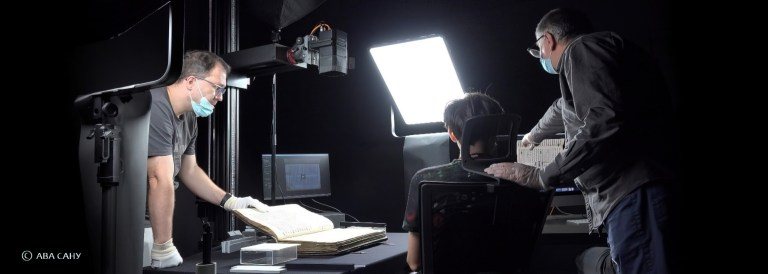

- Institute for Balkan Studies, Serbian Academy of Sciences and Arts: a specialist library for Balkan studies, with access to the institute’s publications and digital repository.
- Institute of History Belgrade and Istorijski časopis: historical research and the archive of a scholarly journal covering the period from the early Middle Ages to 1918.
- National Library of Serbia — digital services: catalogues, descriptions of manuscripts and archival materials, a digital repository, and digital collections.
- State Archives of Serbia — fonds and collections: descriptions of archival holdings and guidance for research, especially useful for modern and contemporary history.
For the full pathway, visit Historical research and Memory and conscience.