
The Bosnian Church and the Debate on Dualism
Medieval Bosnia occupied a crossroads between the Adriatic, Serbian lands, Hungary, and the Byzantine world. Different Christian authorities and traditions coexisted in this region. The presence of communities called krstjani and contacts between Balkan and western religious groups have fuelled a long debate: what was the relationship between the Bosnian Church and Bogomilism?
The short answer is that the Bosnian Church cannot automatically be identified as a Bogomil church. Sources attest controversies, contacts, and accusations of heresy, but their interpretation remains contested. This essay presents key issues in the debate, distinguishing medieval history from modern theories that have often assigned the past a national or political meaning.
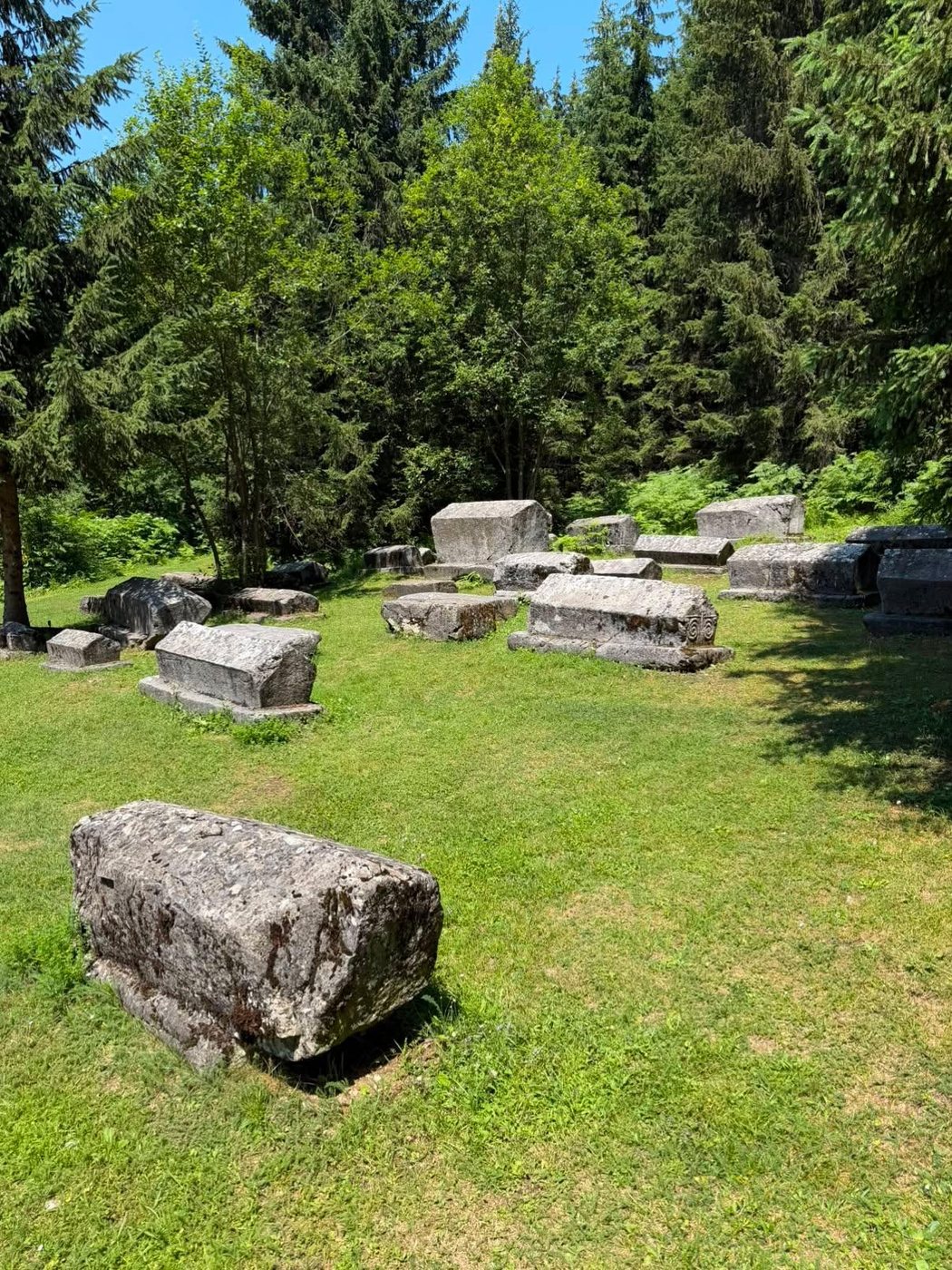
A church difficult to define
Documentation on the Bosnian Church is uneven. It includes charters, correspondence, religious texts, testimony from foreign ecclesiastical authorities, and later sources. The word krstjani appears for its members, but the sources do not provide a systematic treatise setting out the community’s faith and organisation in full.
External authors called some groups “heretics,” “Patarens,” or “Manichaeans,” terms that did not always correspond to believers’ self-understanding. Catholic, Orthodox, and political authorities had different reasons for describing a community as deviant. A polemical label may preserve valuable information, but it is not a neutral description.
The question is not simply whether dualist influences existed. We must distinguish the presence of individual believers, the circulation of ideas, an organised network, and the identification of the entire Bosnian Church with a doctrine. These are progressively broader claims and require different evidence.
Evidence of contact and its interpretation
Some western sources connect Balkan circles with dualist communities in Italy and southern France. The expression ordo Sclavoniae appears in the debate in connection with the circulation of preachers, religious authorities, and teachings. Piotr Czarnecki reconstructs the doctrine attributed to this milieu through western sources and discusses Bosnia’s possible role in the history of Balkan dualism.
Other scholars are more cautious about drawing general conclusions from these contacts. Georgi Minczew, examining a text associated with John the Water-Bearer and its interpretations, revisits the question of dualism in the Bosnian Church. A text or contact showing religious affinity may document circulation; by itself, it does not prove that the whole Bosnian community shared the same beliefs.
Manuel Lorenz’s study of relations among Bogomils, Cathars, and Bosnian Christians also assesses the extent of dualist influence without adopting the broadest reconstructions. Comparing these studies is useful precisely because it shows how the debate depends on the weight assigned to fragmentary texts, hostile testimony, and documents of contact.
Three levels of claim not to confuse
Contacts: some evidence links Balkan circles to wider dualist networks. The meaning of each document must be assessed in context.
Influences: ideas and practices may have been shared or transmitted between communities. The direction and extent of each influence remain historiographical questions.
Collective identity: the claim that the Bosnian Church as a whole was Bogomil is much broader. It does not follow automatically from evidence of contact or similarity.
This distinction allows us to describe an interwoven spiritual history without reducing communities to a single label. It also avoids a false choice: either Bosnia was entirely Bogomil or it had no contact with dualism. There is a wide field of research between those formulations.
How the “Bogomil theory” of Bosnia developed
Modern debate has not remained within medieval studies. From the nineteenth century onwards, the identification of the Bosnian Church with Bogomilism was used to explain the later presence of Muslims in Bosnia. Some narratives argued that conversion to Islam was encouraged by a supposed affinity between Bogomilism and Islam. This may offer an attractive, simple continuity between different periods, but presumed similarity is not proof of a collective conversion or its motives.
Ines Aščerić-Todd traces the origins of the “Bogomil Theory” and criticises its use as a general explanation for the Bosnian conversion to Islam. Her article places the theory alongside other nationalist and politicised interpretations, challenging its premises and intellectual genealogy. This is a strong historiographical argument that should be read in full; her contribution nevertheless makes clear why a medieval hypothesis should not be turned into an identity truth about the present.
Criticising the Bogomil theory does not mean denying every form of religious dissent or dualist influence in Bosnia. It means asking what each source actually demonstrates and rejecting narratives that derive modern religious identities from an unproven continuity.
A method for studying Balkan plurality
Research into the region’s spiritual history benefits from comparison: local and external sources; contemporary documents and later accounts; self-description and accusation; doctrinal resemblance and evidence of institutional connection. When scholars reach different conclusions, the site makes this explicit rather than hiding disagreement behind false certainty.
Bosnia is neither a marginal chapter in Bogomil history nor something to be absorbed into a Serbian or Croatian national history. It is a specific historical space with its own institutions, communities, and relationships. Connections with Bulgaria, Serbia, the Byzantine world, and the Adriatic help us understand the Balkans as a region of exchange; they do not erase the differences among its traditions.
Why this comparison matters to the project
The project relates medieval dissent to the contemporary question of freedom of conscience, but it does not establish direct descent between the Bogomils, the Bosnian Church, and modern Serbia. The connection is philosophical: what happens when institutions define a single legitimate form of faith and belonging? How can minority histories be remembered without turning them into invented symbols?
A respectful account of Serbia and the Balkans should not assign a single spirituality to an entire people. It should recognise historical plurality, controversies, and the limits of the evidence. This care, more than a legend of continuity, makes serious cultural dialogue possible.
Sources and specialist studies
- Piotr Czarnecki, “The Doctrine of the Ordo Sclavoniae in Light of Western Sources and the Issue of the Origins of the Dualist Heresy in Bosnia,” Studia Ceranea 12 (2022), 11–28.
- Georgi Minczew, “John the Water-Bearer: Once Again on Dualism in the Bosnian Church,” Studia Ceranea 10 (2020), 415–424.
- Manuel Lorenz, “Bogomils, Cathars and Bosnian ‘Christians’: The Transfer of Dualistic Heresy between Orient and Occident (11th–13th Century),” Historijska traganja 15 (2015), 9–66.
- Ines Aščerić-Todd, “Patarenes, Protestants and Islam in Bosnia: Deconstructing the Bogomil Theory,” Islam and Christian–Muslim Relations 33, no. 3 (2022), 213–234.
This essay summarises an open historiographical debate. Sources attest contacts and accusations in different contexts; their significance for the overall identity of the Bosnian Church remains disputed.